


Planetary Parade in the Sky: Six Visible Planets Aligning at End of February
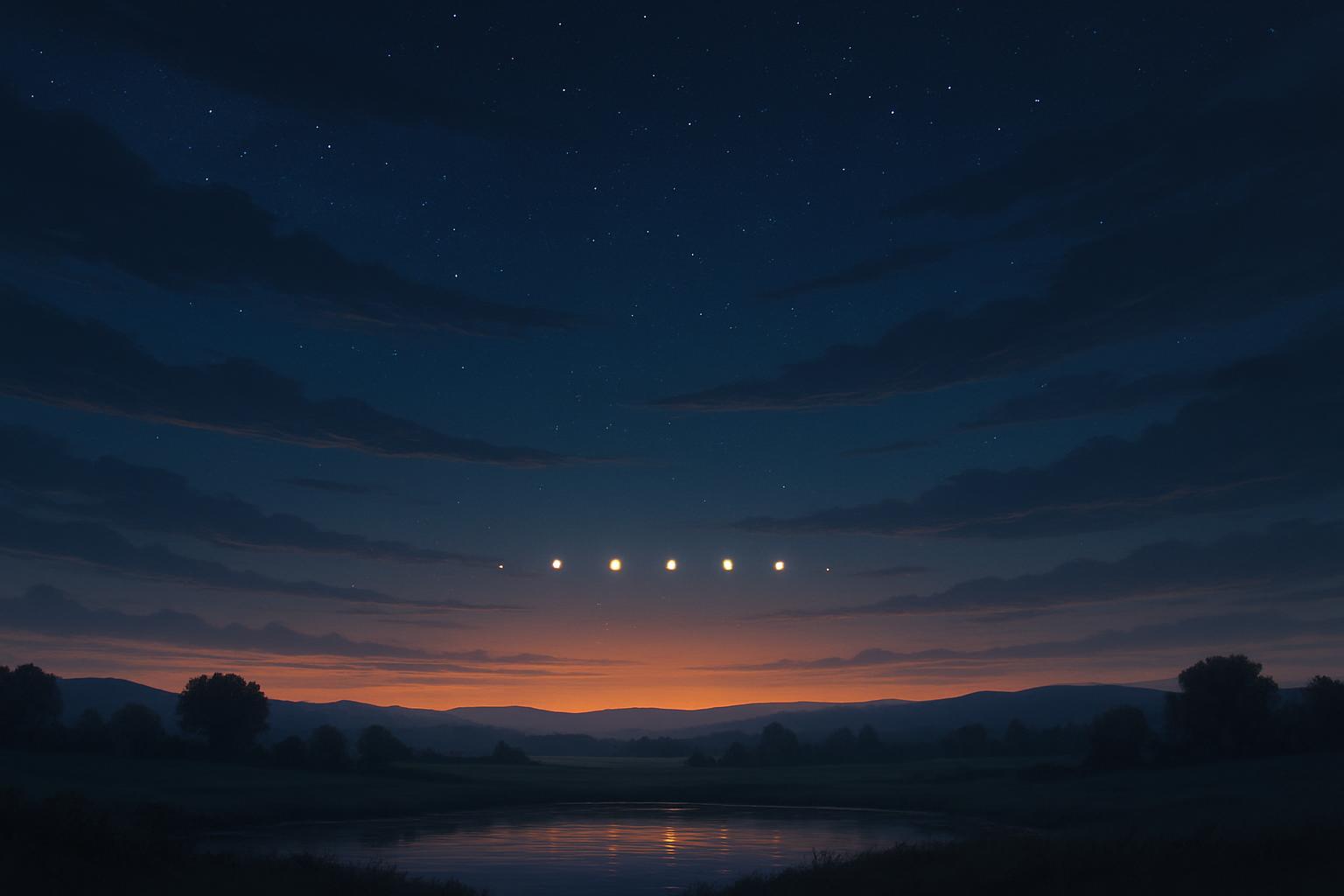
SixplanetsareliningupintheskyattheendofFebruary, creatingaplanetaryparadethatmostpeoplecanseewithoutatelescope.
二月底,六顆行星將在天空中排成一列,形成壯觀的行星遊行,大多數人無需望遠鏡即可觀測到。
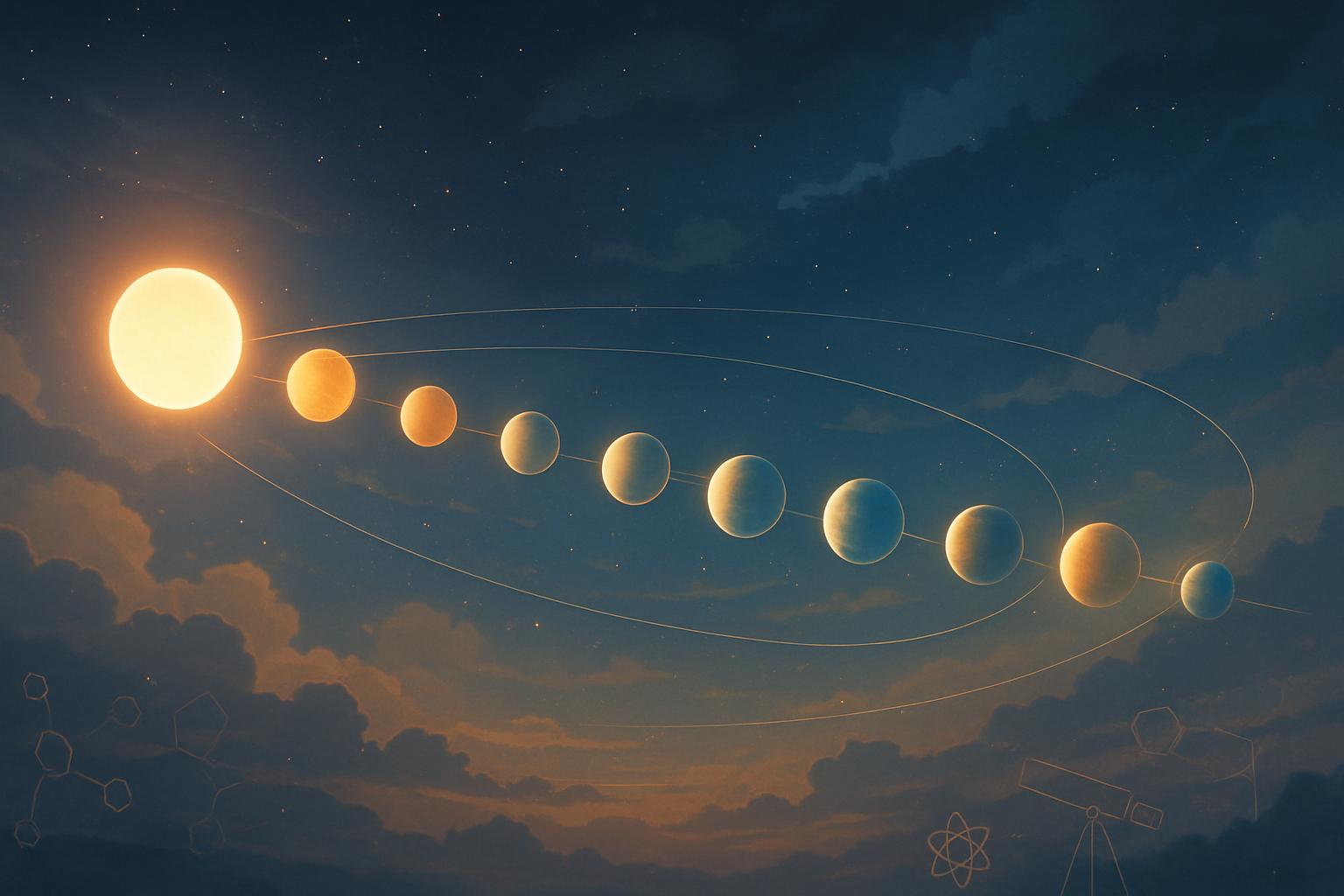
Duringaplanetaryparade, multipleplanetsappeartoaligninthesky, althoughtheyarenotactuallyinastraightlinebutareclosetogetherononesideofthesun.
在行星遊行中,多顆行星在天空中看起來排列成一條直線,儘管它們實際上並不是在一條直線上,而是靠近地排列在太陽的一側。
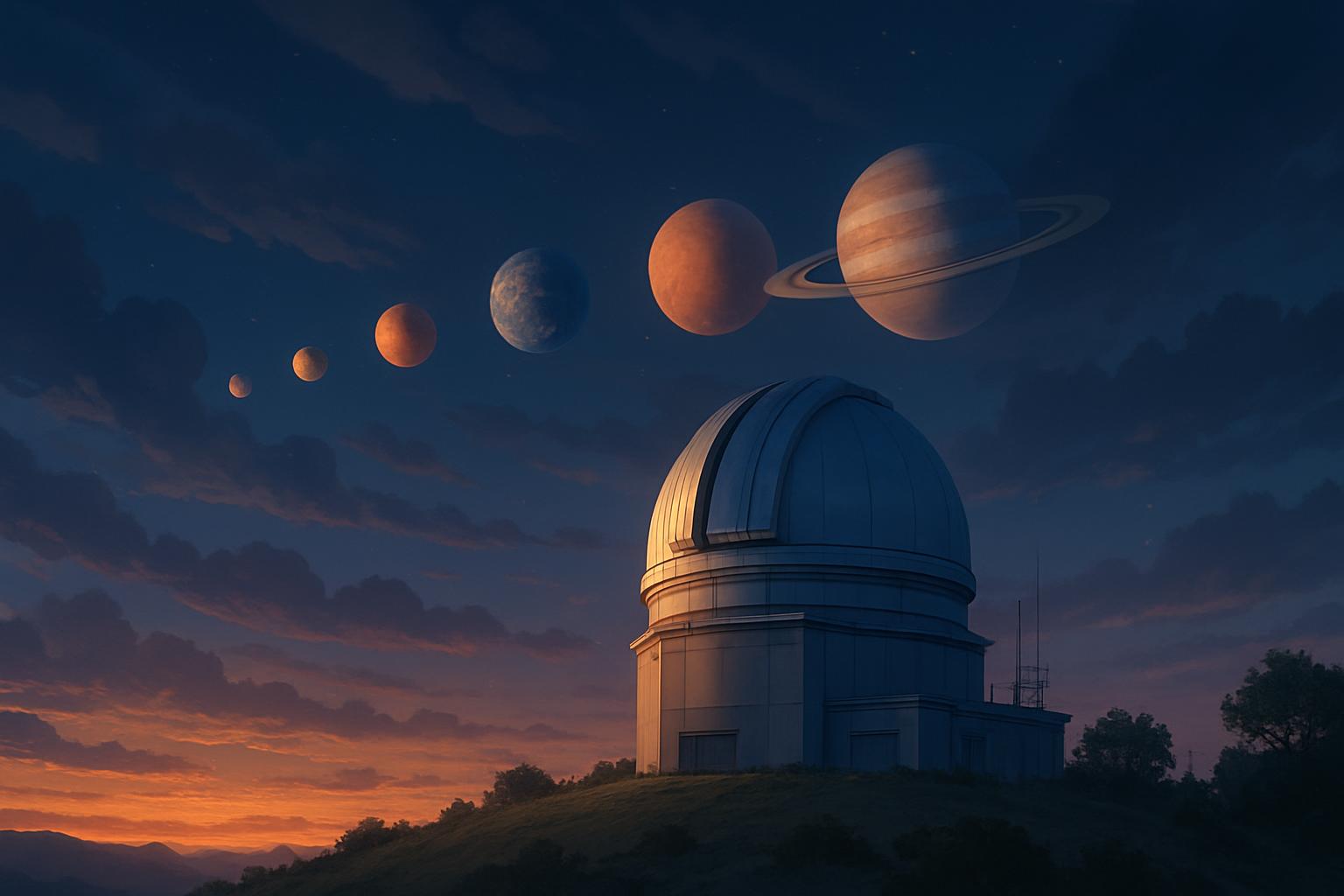
AccordingtoNASA, skygazerscanusuallyseetwoorthreeplanetsaftersunset, withrareoccasionsoffourorfiveplanetsbeingvisible.
據美國太空總署稱,觀星者通常在日落後可以看到兩到三顆行星,偶爾也能看到四到五顆行星。
Lastyear, therewerelineupsofsixandallsevenplanetsvisibleinthenightsky, offeringauniquecelestialdisplay.
去年,夜空中曾出現六顆行星和七顆行星同時出現的景象,呈現出獨特的天文奇觀。
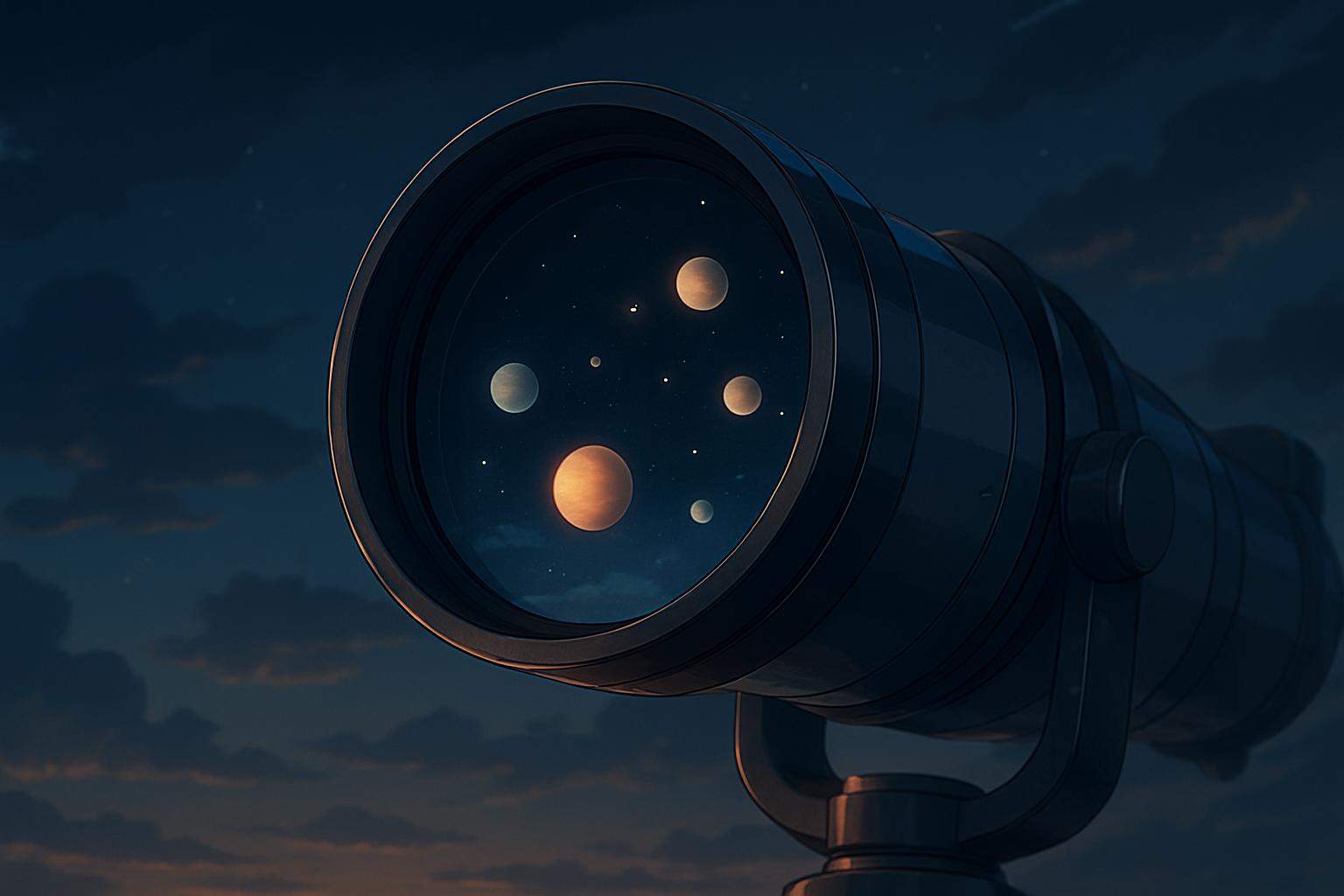
Thisweekend, Mercury, Venus, Jupiter, andSaturnwillbevisibletothenakedeye, whileUranusandNeptunecanonlybeseenwithbinocularsortelescopes.
本週末,水星、金星、木星和土星可以用肉眼看到,而天王星和海王星只能用雙筒望遠鏡或天文望遠鏡看到。
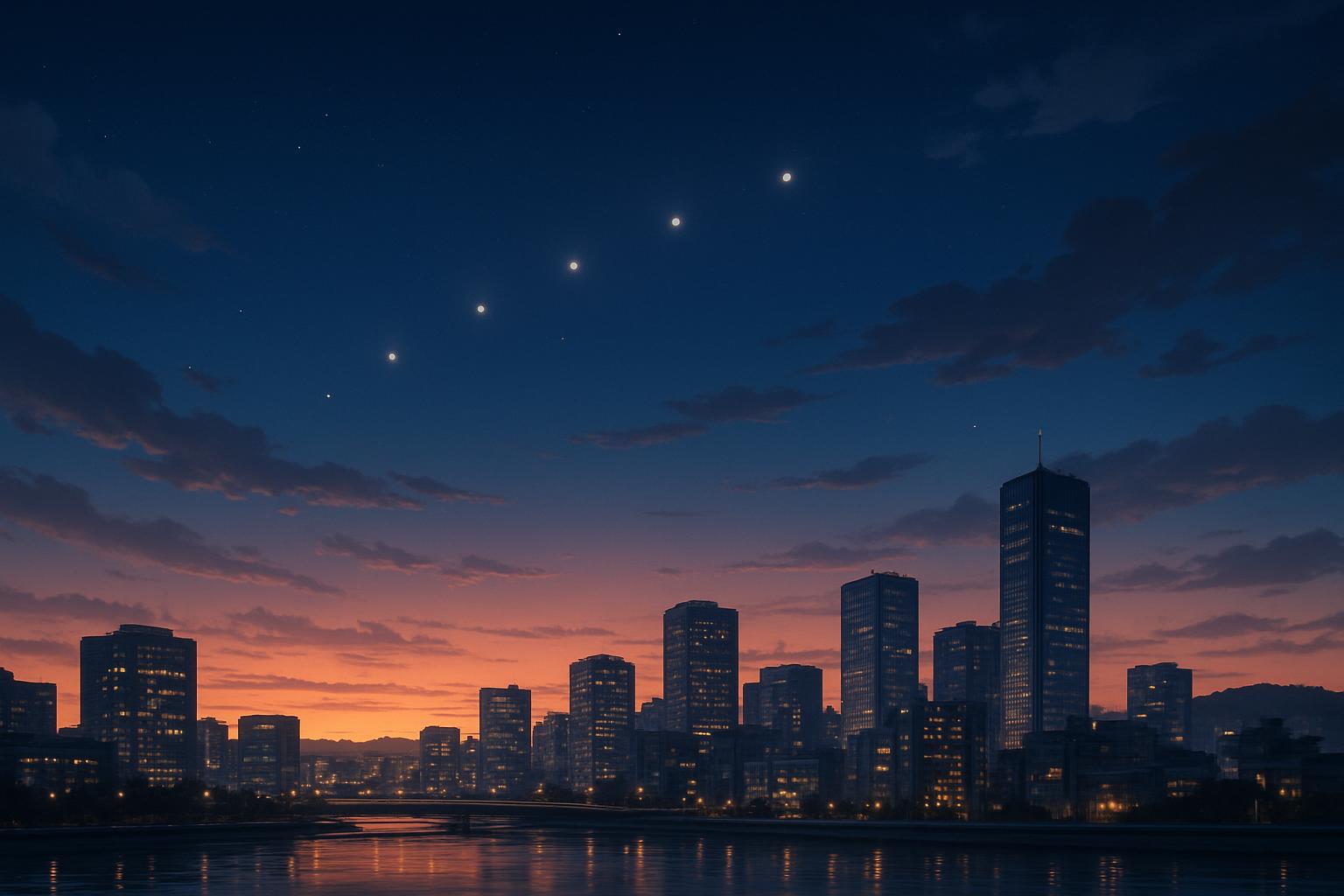
Toviewtheplanets, headoutdoorsaboutanhouraftersunsetandmoveawayfromtallbuildingsandtreesobstructingtheview, focusingonthewesternsky.
要觀賞行星,請在日落後約一小時到戶外,遠離遮擋視線的高樓大廈和樹木,將注意力集中在西方的天空。
Mercury, Venus, andSaturnwillbeclosetothehorizon, whileJupiter, Uranus, andNeptunewillbehigherup.
水星、金星和土星將接近地平線,而木星、天王星和海王星則位於較高的位置。
PlanetaryscientistSaraMazroueiadvisesthatifacelestialbodytwinkles, it'sastar, butifitdoesn't, it'saplanet.
行星科學家薩拉·馬茲魯伊建議,如果一個天體閃爍,那就是恆星;如果不閃爍,那就是行星。
Theplanetaryparadeshouldbevisibleovertheweekendandinthesubsequentdays, offeringauniqueopportunitytoconnectwithancientastronomers.
行星遊行將在周末及之後幾天內可見,為我們提供了一個與古代天文學家交流的獨特機會。
NASApointsoutthatatleastonebrightplanetisvisibleonmostnights, providingafascinatingwaytoexplorethenightsky.
美國太空總署指出,大多數夜晚至少可以看到一顆明亮的行星,這為探索夜空提供了一種引人入勝的方式。
AstronomerEmilyElizondofromMichiganStateUniversitysuggeststhatobservingmultipleplanetsatoncecanhelpusappreciatethemethodsofancientastronomerswhostudiedtheuniversesimplybylookingupatthestarsandplanets.
密西根州立大學的天文學家艾米麗·埃利鬆多認為,同時觀測多個行星可以幫助我們理解古代天文學家研究宇宙的方法,他們只需抬頭仰望星空和行星。
Six planets are lining up in the sky at the end of February, creating a planetary parade that most people can see without a telescope.
During a planetary parade, multiple planets appear to align in the sky, although they are not actually in a straight line but are close together on one side of the sun.
According to NASA, skygazers can usually see two or three planets after sunset, with rare occasions of four or five planets being visible.
Last year, there were lineups of six and all seven planets visible in the night sky, offering a unique celestial display.
This weekend, Mercury, Venus, Jupiter, and Saturn will be visible to the naked eye, while Uranus and Neptune can only be seen with binoculars or telescopes.
To view the planets, head outdoors about an hour after sunset and move away from tall buildings and trees obstructing the view, focusing on the western sky.
Mercury, Venus, and Saturn will be close to the horizon, while Jupiter, Uranus, and Neptune will be higher up.
Planetary scientist Sara Mazrouei advises that if a celestial body twinkles, it's a star, but if it doesn't, it's a planet.
The planetary parade should be visible over the weekend and in the subsequent days, offering a unique opportunity to connect with ancient astronomers.
NASA points out that at least one bright planet is visible on most nights, providing a fascinating way to explore the night sky.
Astronomer Emily Elizondo from Michigan State University suggests that observing multiple planets at once can help us appreciate the methods of ancient astronomers who studied the universe simply by looking up at the stars and planets.
Play News
or click any sentence to play
More News coming up