



Orthodox Christmas Celebrations Around the World
MillionsofpeoplearoundtheworldcelebratedOrthodoxChristmasonWednesday, nearlytwoweeksaftermuchoftheworldmarkedtheholyday.
週三,世界各地數百萬人慶祝了東正教聖誕節,比世界大部分地區慶祝這一聖日晚了近兩週。
CertainEasternOrthodoxchurches, includingthoseinRussianandothertraditions, followtheancientJuliancalendar.
包括俄羅斯東正教和其他一些東正教傳統在內的一些東正教教堂,都遵循古老的儒略曆。
Itruns13 dayslaterthantheGregoriancalendar, usedbyCatholicandProtestantchurchesaswellasbymuchofthesecularworldforeverydayuse.
它比公曆晚 13 天,公曆是天主教和新教教會以及世俗世界大部分地區日常使用的曆法。
TheEthiopianOrthodoxChurchandsomeotherOrientalOrthodoxchurches—whicharedistinctfromEasternOrthodoxbutsharemanytraditions—alsocelebratedChristmasonWednesday.
埃塞俄比亞正統派和其他一些東方正統教會(與東正教不同,但有許多共同的傳統)也在周三慶祝了聖誕節。
OtherEasternOrthodox, includingthoseintheGreektradition, celebrateChristmasonthesame Dec. 25 dateasCatholicandProtestantchurches.
其他東正教教派,包括希臘東正教教派,與天主教和新教教會一樣,都在12月25日慶祝聖誕節。
MostOrthodoxagreethat Dec. 25 isthedateofChristmas, ortheFeastoftheNativity, astheycallit.
大多數東正教徒都認為12月25日是聖誕節,或者他們稱之為耶穌誕生節。
Thequestioniswhether Dec. 25 fallson Dec. 25 or Jan. 7.
問題是,12月25日究竟是12月25日還是1月7日。
Thatrequiresalittleunpacking.
這需要稍微解釋一下。
TheancientchurchintheRomanEmpiresetitsreligiousfeastsbasedontheJuliancalendar, butaftermorethanamillennium, thatcalendarhadincreasinglygottenoutofalignmentwiththesolaryear.
古羅馬帝國時期的教會根據儒略曆設定宗教節日,但經過一千多年,儒略曆與太陽年越來越不吻合。
SixteenthcenturyPopeGregory XIIIapprovedarevised, moreastronomicallyprecisecalendar, whichbearshisname.
十六世紀教宗格里高利十三世批准了一部修訂後的、天文觀測更為精確的曆法,該曆法以他的名字命名。

Itabruptlyshiftedthecalendarseveraldaysforwardtomakeupforlosttime (literally) andaddedamoreprecisecalculationofleapyears.
它突然將日曆向前調整了幾天,以彌補失去的時間(字面意義上的),並增加了對閏年的更精確計算。
ProtestantchurcheseventuallyfollowedtheCatholicleadinadoptingthecalendar, asdidseculargovernments.
新教教會最終效法天主教的做法,採用了該曆法,世俗政府也同樣如此。
AllEasternOrthodoxkepttotheoldcalendaruntil 1923, whenaninter-OrthodoxgatheringadoptedarevisedJuliancalendarthatessentiallymirrorstheGregorian.
直到 1923 年,所有東正教徒都沿用舊曆,當時一次東正教內部會議通過了修訂後的儒略曆,該曆法基本上與格里高利曆相同。
Most (but not all) churchesintheGreekOrthodoxtraditionhaveadoptedthis, ashavethoseinRomanian, Bulgarianandothertraditions.
大多數(但並非全部)希臘東正教教會都採用了這種做法,羅馬尼亞、保加利亞和其他教派的教會也採用了這種做法。
ButtheRussianOrthodoxChurch, thelargestcommunioninEasternOrthodoxy, hasstayedontheoldcalendar, observingChristmason Jan. 7 onthenewcalendar, ashaveSerbian, GeorgianandsomeotherOrthodox.
但作為東正教最大的教派,俄羅斯東正教仍然沿用舊曆,在新曆中於 1 月 7 日慶祝聖誕節,塞爾維亞東正教、格魯吉亞東正教和其他一些東正教教派也是如此。
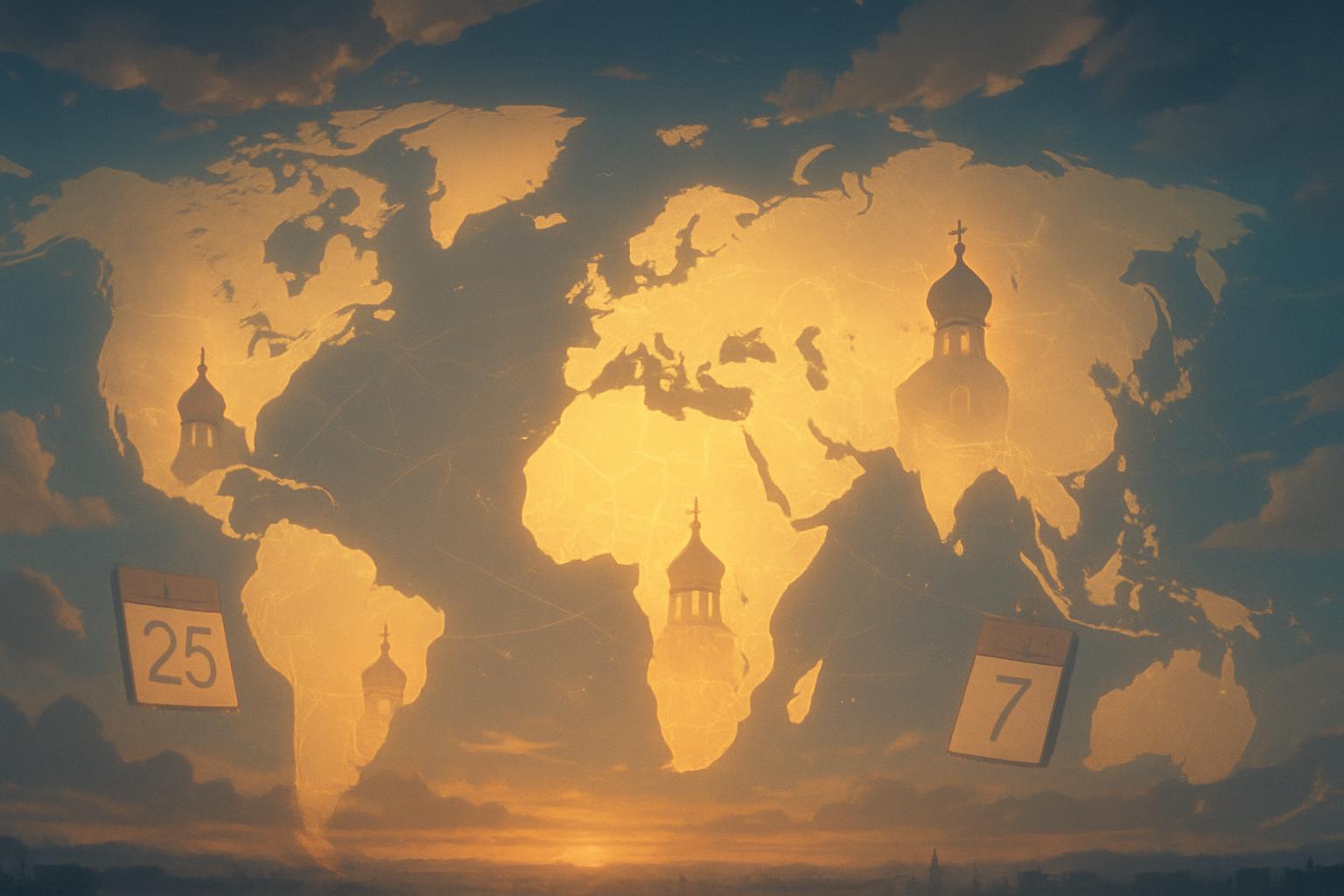
SomeOrthodoxinUkrainehavebeguntoobserveChristmason Dec. 25, whileothershaveretainedthe Jan. 7 observance.
烏克蘭的一些東正教徒開始在 12 月 25 日慶祝聖誕節,而另一些東正教徒則保留了 1 月 7 日的慶祝方式。
OnenotableexceptionistheArmenianOrthodoxtradition, whichobservesChristmason Jan. 6.
一個值得注意的例外是亞美尼亞東正教的傳統,他們在 1 月 6 日慶祝聖誕節。
IntheUnitedStates, observancesvary.
在美國,各地的慶祝方式不盡相同。
ChurchesintheGreekandAntiochiantraditionsobservedChristmason Dec. 25.
希臘和安提阿教會的傳統是在12月25日慶祝聖誕節。
SomechurchesintheSlavictradition, includingSerbianandsmallerRussianchurches, observeiton Jan. 7.
一些斯拉夫傳統的教堂,包括塞爾維亞教堂和一些較小的俄羅斯教堂,會在 1 月 7 日慶祝這個節日。
Traditionsvary, buttypicallythebigworshipserviceisthenightbefore.
各地習俗不盡相同,但通常大型禮拜儀式會在前一天晚上舉行。
InSerbianOrthodoxchurches, worshipoftenbeginswithashortoutdoorceremonyinvolvingtheburningofanoakbranchoryoungoaktree, accompaniedbyafull-throatedproclamationofthebirthofChrist.
在塞爾維亞東正教教堂裡,禮拜通常以一個簡短的戶外儀式開始,儀式包括焚燒橡樹枝或幼橡樹,並伴隨著對基督誕生的熱烈宣告。
religion coveragereceivessupportthroughthe’scollaborationwithTheConversationUS, withfundingfromLillyEndowmentInc.
宗教報道得到了《紐約時報》與 The Conversation US 的合作支持,資金來自禮來基金會。
Theissolelyresponsibleforthiscontent.
此內容由本人全權負責。
Millions of people around the world celebrated Orthodox Christmas on Wednesday, nearly two weeks after much of the world marked the holy day.
Certain Eastern Orthodox churches, including those in Russian and other traditions, follow the ancient Julian calendar.
It runs 13 days later than the Gregorian calendar, used by Catholic and Protestant churches as well as by much of the secular world for everyday use.
The Ethiopian Orthodox Church and some other Oriental Orthodox churches — which are distinct from Eastern Orthodox but share many traditions — also celebrated Christmas on Wednesday.
Other Eastern Orthodox, including those in the Greek tradition, celebrate Christmas on the same Dec. 25 date as Catholic and Protestant churches.
Most Orthodox agree that Dec. 25 is the date of Christmas, or the Feast of the Nativity, as they call it.
The question is whether Dec. 25 falls on Dec. 25 or Jan. 7.
That requires a little unpacking.
The ancient church in the Roman Empire set its religious feasts based on the Julian calendar, but after more than a millennium, that calendar had increasingly gotten out of alignment with the solar year.
Sixteenth century Pope Gregory XIII approved a revised, more astronomically precise calendar, which bears his name.
It abruptly shifted the calendar several days forward to make up for lost time (literally) and added a more precise calculation of leap years.
Protestant churches eventually followed the Catholic lead in adopting the calendar, as did secular governments.
All Eastern Orthodox kept to the old calendar until 1923, when an inter-Orthodox gathering adopted a revised Julian calendar that essentially mirrors the Gregorian.
Most (but not all) churches in the Greek Orthodox tradition have adopted this, as have those in Romanian, Bulgarian and other traditions.
But the Russian Orthodox Church, the largest communion in Eastern Orthodoxy, has stayed on the old calendar, observing Christmas on Jan. 7 on the new calendar, as have Serbian, Georgian and some other Orthodox.
Some Orthodox in Ukraine have begun to observe Christmas on Dec. 25, while others have retained the Jan. 7 observance.
One notable exception is the Armenian Orthodox tradition, which observes Christmas on Jan. 6.
In the United States, observances vary.
Churches in the Greek and Antiochian traditions observed Christmas on Dec. 25.
Some churches in the Slavic tradition, including Serbian and smaller Russian churches, observe it on Jan. 7.
Traditions vary, but typically the big worship service is the night before.
In Serbian Orthodox churches, worship often begins with a short outdoor ceremony involving the burning of an oak branch or young oak tree, accompanied by a full-throated proclamation of the birth of Christ.
religion coverage receives support through the ’s collaboration with The Conversation US, with funding from Lilly Endowment Inc.
The is solely responsible for this content.
Play News
or click any sentence to play
More News coming up


Brown University Shooting: Students Turn to Social Media During Emergency
Reviving Old Furniture with a Modern Twist

New Jersey Limits Students' Cellphone Use During School Day

Changes to Federal Child Care Subsidies Rattle Families

Top Affordable Cars and SUVs for 2026

Growing Herbs Indoors: Tips and Tricks

More News coming up
Brown University Shooting: Students Turn to Social Media During Emergency
Reviving Old Furniture with a Modern Twist
New Jersey Limits Students' Cellphone Use During School Day
Changes to Federal Child Care Subsidies Rattle Families
Top Affordable Cars and SUVs for 2026
Growing Herbs Indoors: Tips and Tricks