



Archaeologists Reveal New Discovery Near Stonehenge in 2020
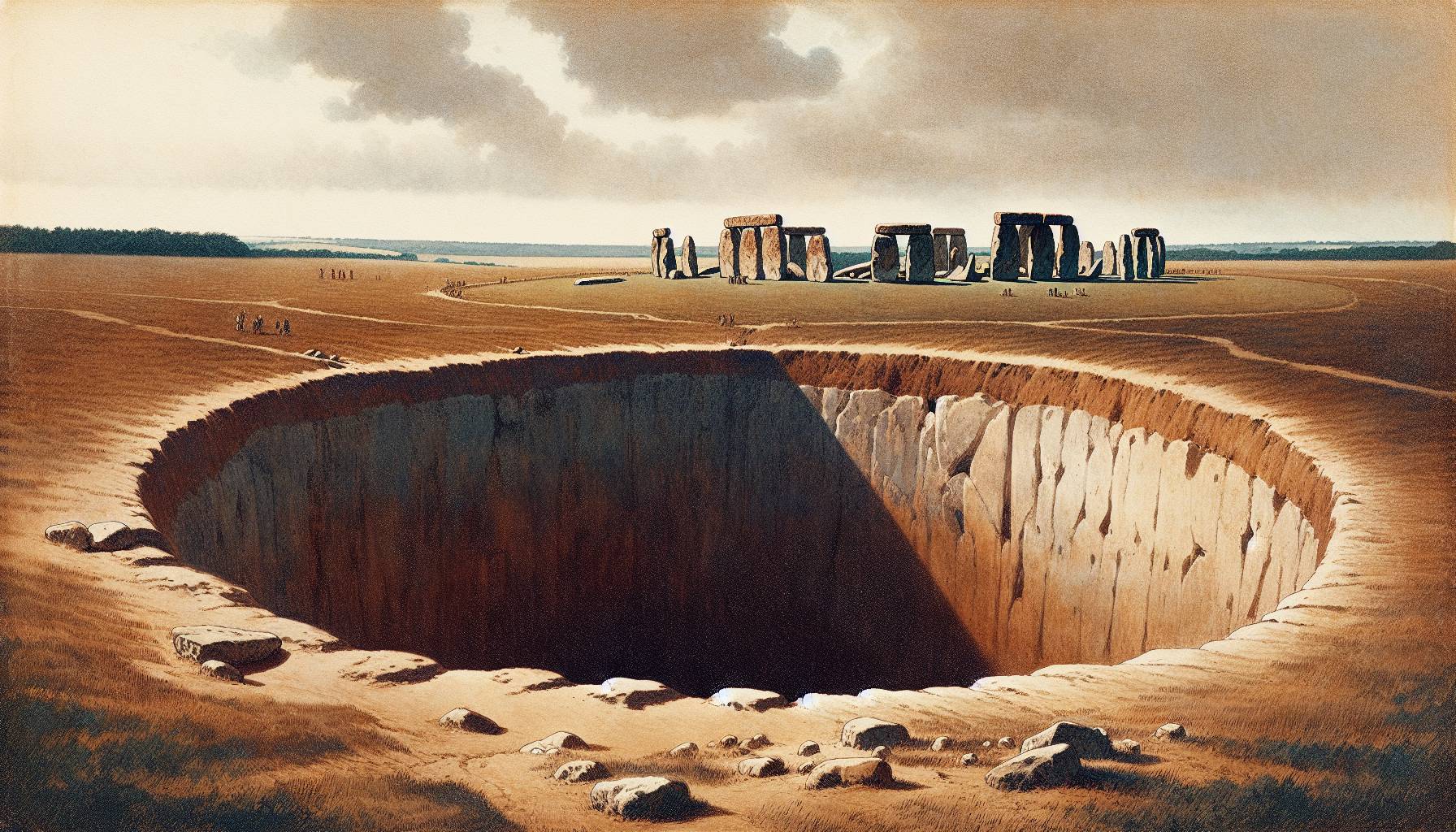
AteamofarchaeologistshasunveiledhowthemassiveNeolithicpitsnearStonehengewerebelievedtohavebeencreatedin 2020.
一支考古學家團隊在 2020 年揭示了巨石陣附近巨大的新石器時代坑洞的形成過程。
Thepits, whichare10metersindiameterandoverfivemetersdeep, werepositionedinacirclespanningover2kilometers, makingthemasignificantprehistoricstructure.
這些坑直徑 10 米,深 5 米多,呈圓形分佈,跨度超過 2 公里,是重要的史前建築。

Usingvariousspecializedtechnologies, researcherswereabletoanalyzethesizeandlayoutofthepits.
研究人員利用各種專業技術,分析了這些坑的大小和佈局。
ProfessorVinceGaffney, fromtheUniversityofBradford'sSchoolofArchaeologicalandForensicSciences, suggestedthatthesepitscouldbeoneofthelargestprehistoricstructuresinBritain.
布拉德福德大學考古與法醫學學院的文斯加夫尼教授認為,這些坑可能是英國最大的史前建築之一。

SamplesweretakenfromthepitsusingnarrowboreholestoextractDNA, revealingthetypesofplantsandanimalspresentatthattime.
透過狹窄的鑽孔從坑中採集樣本以提取 DNA,揭示了當時存在的動植物種類。
Thisgeneticinformationhelpedresearchersdeterminethatthepitswereman-madeduringtheLateNeolithicperiodmorethan 4,000 years ago.
這項基因資訊幫助研究人員確定這些坑是4000多年前新石器時代晚期人為開鑿的。

Archaeologistsbelievethatthedifficultchalkylandscapemadeitachallengetodigthepits, speculatingthatthepitsmayhavehadaceremonialorsacredsignificance.
考古學家認為,由於白堊質地崎嶇,挖掘這些坑洞頗具挑戰性,他們推測這些坑洞可能具有某種儀式或神聖的意義。
Thealignmentanddistancesbetweenthepitsandsurroundingstructuressuggestapurposefuldesignrelatedtoceremonialactivities, accordingtoProfessorVinceGaffney.
文斯·加夫尼教授認為,坑與周圍建築物的排列和距離表明,這是與祭祀活動相關的有目的的設計。
A team of archaeologists has unveiled how the massive Neolithic pits near Stonehenge were believed to have been created in 2020.
The pits, which are 10 meters in diameter and over five meters deep, were positioned in a circle spanning over 2 kilometers, making them a significant prehistoric structure.
Using various specialized technologies, researchers were able to analyze the size and layout of the pits.
Professor Vince Gaffney, from the University of Bradford's School of Archaeological and Forensic Sciences, suggested that these pits could be one of the largest prehistoric structures in Britain.
Samples were taken from the pits using narrow boreholes to extract DNA, revealing the types of plants and animals present at that time.
This genetic information helped researchers determine that the pits were man-made during the Late Neolithic period more than 4,000 years ago.
Archaeologists believe that the difficult chalky landscape made it a challenge to dig the pits, speculating that the pits may have had a ceremonial or sacred significance.
The alignment and distances between the pits and surrounding structures suggest a purposeful design related to ceremonial activities, according to Professor Vince Gaffney.
Play News
or click any sentence to play
More News coming up